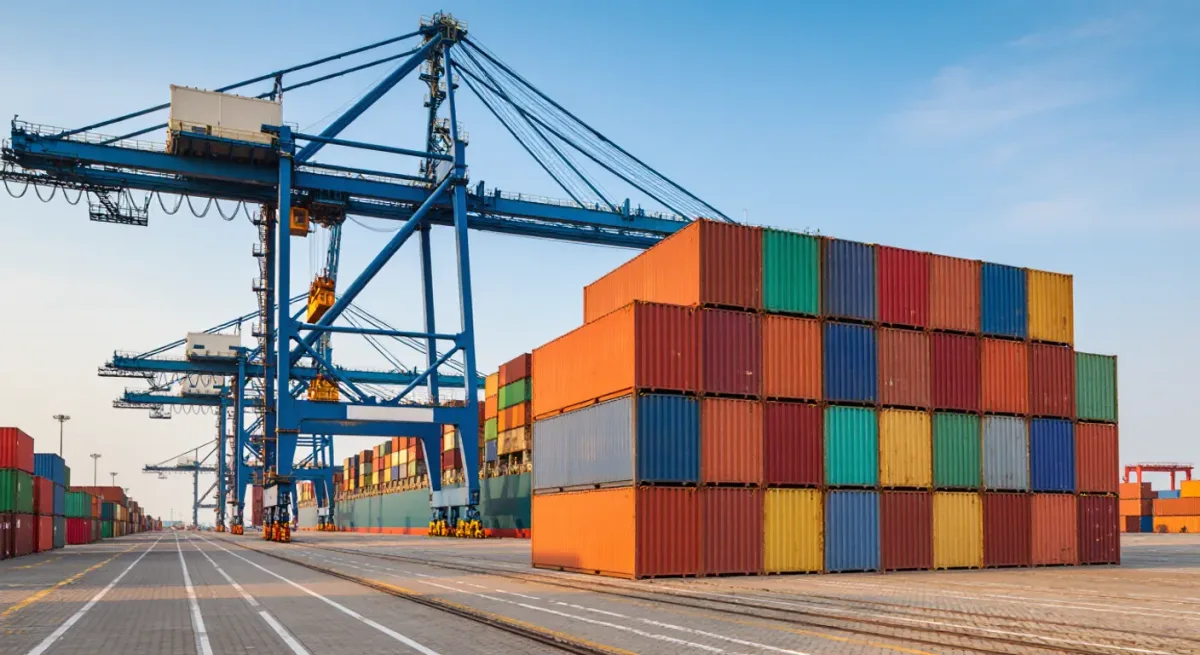
CEPA stands for Comprehensive Economic Partnership Agreement, the template the UAE has used since 2021 to negotiate bilateral trade deals, more than twenty of them concluded so far, with partners including India, Türkiye, Indonesia, Korea and Australia. The programme's purpose is arithmetic: the UAE's non-oil foreign trade passed AED 3 trillion in 2024, a record, and each agreement shaves tariffs and opens services access on a named corridor.
The India deal set the template. Negotiated quickly, signed in February 2022 and in force that May, it cut or eliminated duties across thousands of tariff lines for UAE exporters and opened Indian services markets in exchange. Bilateral non-oil trade with India, already the UAE's largest partner, grew further after entry into force, and officials on both sides have publicly targeted a much larger figure for the corridor. For UAE trade policy, CEPA is the single most active instrument of the decade.
The network so far
| Partner | Status |
|---|---|
| India | Signed February 2022, in force May 2022 |
| Israel | Signed 2022, in force 2022-23 |
| Indonesia | Signed 2022, in force 2023 |
| Türkiye | Signed 2023, in force September 2023 |
| Korea | Concluded 2024 |
| Australia | Concluded 2024-25 |
| Others | Georgia, Serbia, Mauritius, Cambodia, Costa Rica, Malaysia and more |
The full list runs across Asia, Europe, Africa and Latin America, and negotiations continue; officials have described an eventual network spanning dozens of markets covering a large share of world trade.
What is in a CEPA
Three things, consistently. Tariff elimination or reduction on goods trade, the headline that exporters price immediately. Services market access, from financial services to logistics and digital trade. And cooperation chapters covering customs facilitation, intellectual property and SMEs, which sound soft but determine how fast paperwork moves at ports. Government studies attached to each signing project export gains in the billions of dollars over a decade, figures the trade ministry publishes with each deal.
Why the UAE negotiates bilaterally
The GCC negotiates trade agreements as a bloc under its customs union, but the UAE sought speed beyond the bloc's pace and structured CEPAs as UAE-specific bilateral deals, a formula its partners accepted. The result is a dense web of UAE-centred access that competitors in the region do not match, reinforcing Dubai and Jebel Ali's role as the entrepôt through which Asia, Europe and Africa trade with each other.
The results, honestly measured
Attribution is genuinely hard: trade with CEPA partners has grown, but the same years saw supply-chain rerouting, a strong non-oil cycle and the UAE's population boom. Officials attribute billions in new non-oil trade to the agreements; independent trade economists credit a mix. What is verifiable: the corridors targeted by the first deals have grown faster than the UAE's aggregate non-oil trade, and utilisation rates, firms actually claiming preferences, have risen as awareness spread.
The trade totals feed the D33 agenda's AED 32 trillion cumulative target, covered in our explainer on Dubai's D33 economic agenda.
The corridors that matter most
Critics of the programme note, fairly, that trade agreements do not create trade by themselves, demand, logistics and exchange rates do the work, and that attribution of the corridor growth to the signatures alone overstates the mechanism. The reply from the trade ministry's data is the utilisation trend: more firms claiming preferences each year, which is the closest thing a trade deal has to a receipt, and the receipts are accumulating.
Sector effects, beyond goods
The services chapters deserve attention goods statistics crowd out. UAE banks, insurers, logistics operators and engineering firms gained formal access commitments in CEPA partners' markets, which matters for a federation whose service exports, financial, transport and business services, run to a substantial share of total exports. Professionals' mobility provisions, mutual recognition and visa chapters in some agreements, ease the movement of engineers, auditors and project managers along the same corridors the goods travel. And the digital-trade and e-commerce chapters in the newer agreements write the rules of the fastest-growing segment of the flows, positioning UAE-based platforms to serve partner markets under agreed terms rather than ad-hoc national rules. For a country whose comparative advantage is intermediation, the agreements are less about what crosses the docks than about who is trusted to move it, and on that measure the programme has widened the franchise.
Three CEPA corridors carry the majority of the programme's commercial weight. India, the largest by volume, pairs the UAE's re-export machine with Indian manufacturing, and the agreement's tariff schedules plus its services chapters made the corridor the template for what followed; bilateral non-oil trade has grown since entry into force, and both governments have publicly targeted a step-change figure for the relationship. Türkiye connects the UAE to a G20 manufacturing economy with complementary supply chains, and the agreement in force since September 2023 doubled the formal framework around a trading relationship that already ran through Gulf logistics. Korea and Australia, the newer additions, tie the UAE to advanced-economy suppliers of capital goods, energy and education services, and their concluded agreements extend the network into markets where Gulf investment treaties previously carried the relationship alone.
| Corridor | In force | Core flows |
|---|---|---|
| India | May 2022 | Gems, electronics, food, re-exports |
| Türkiye | September 2023 | Manufactured goods, gold, construction |
| Indonesia | 2023 | Commodities, food, infrastructure |
| Korea, Australia | 2024-25 concluded | Capital goods, energy, services |
The remaining negotiation list, markets from Africa to Latin America to Europe, extends the web toward the eventual ambition of dozens of partners covering most of world trade, and each signature's commercial logic is the same at smaller scale: preferential access for UAE-based traders, a reason to route regional business through the emirates' ports and free zones. That routing effect, more than any single tariff line, is what the programme buys, and why Dubai's logistics and trading community reads each signing as a pipeline event.
For businesses: using a CEPA
- Check whether your product lines fall under eliminated or reduced duties on the partner's schedule.
- Obtain certificates of origin that satisfy the agreement's rules of origin; this is where claims fail.
- Services exporters should read the partner's specific commitments, which vary by sector and mode.
- Customs facilitation chapters can shorten clearance; qualify for authorised-economic-operator status where offered.
The one-line summary: the UAE is buying itself preferential access to a large slice of world trade, one bilateral agreement at a time, and its exporters hold the receipts.