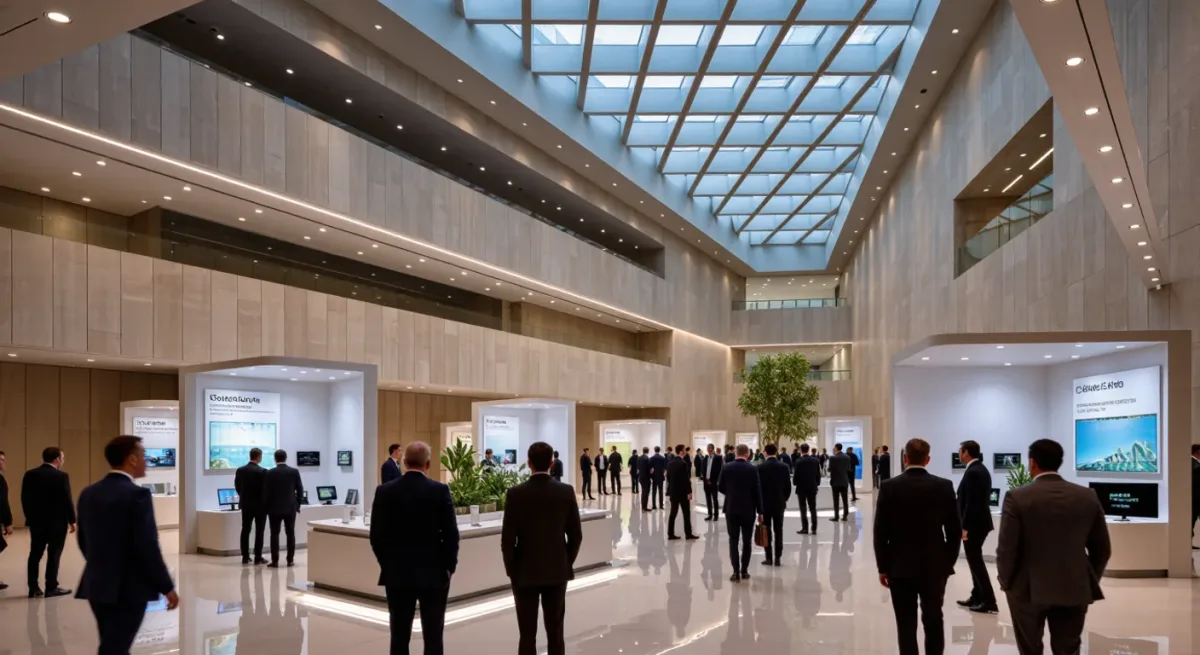
Abu Dhabi Sustainability Week 2026 opened on Sunday, January 11, running through January 15 at the Abu Dhabi National Exhibition Centre under the theme 'The Nexus of Next: All Systems Go'. The event, hosted by the UAE clean-energy company Masdar, brings government delegations, energy executives and financiers into a programme whose summit sessions run January 13-14, with the Zayed Sustainability Prize ceremony anchoring the opening days.
ADSW has become the Gulf's opening fixture on the energy-finance calendar, the regional counterpart to Davos week that follows it. The 2026 edition introduces the ADSW Dialogues, a format change aimed at converting sessions into policy commitments, according to the event's published agenda, and the week again overlaps with high-level UAE-US and European business delegations that use Abu Dhabi's January platform for deal meetings.
What the week is for
Founded in 2008 as a clean-technology gathering, ADSW now functions as the UAE's principal venue for negotiating the money side of energy transition: renewable project finance, hydrogen offtake frameworks, carbon market standards and the African and Asian expansion of Gulf renewables developers. Masdar, the host, sits at the centre of that agenda with its stated multi-gigawatt portfolio across three continents and its participation in the UAE's Net Zero 2050 initiative.
| Programme | Dates |
|---|---|
| Opening ceremony and Zayed Sustainability Prize | January 11 |
| ADSW Summit at ADNEC | January 13-14 |
| ADSW Dialogues (new 2026 format) | Throughout the week |
| Next edition announced | January 10-14, 2027 |
The commercial stakes
For Gulf energy companies, the week is where project pipelines meet lenders. UAE and Saudi developers have used successive editions to announce wind, solar and battery partnerships across Central Asia, Africa and Southeast Asia, and sovereign-linked investors use the corridors for climate-fund commitments. The 2026 edition opens against a changed backdrop: Gulf state budgets have tightened with softer oil prices, and the financing mix for transition projects has shifted toward blended and concessionary structures, which the Dialogues format is explicitly designed to address.
The Zayed Sustainability Prize, awarded during the week, continues its separate track recognising small and medium enterprises, nonprofits and schools working on health, food, energy and water access, a reminder that the event's brand rests as much on development programming as on deal-making.
Why the timing matters
January in Abu Dhabi concentrates the world's energy and sovereign-capital decision-makers ahead of the World Economic Forum, and UAE institutions schedule announcements accordingly: Masdar project launches, ministry partnerships and research agreements cluster in this window. Attendees and analysts treat the week as the first read of the year on Gulf climate-finance appetite, and 2026's read, under a new dialogue format, is whether the region's transition spend holds its growth rate in a tighter fiscal cycle.
The domestic economic backdrop the week lands in, including Dubai's newly reported 2025 growth figures, is tracked in our coverage of Dubai's 2025 GDP performance.
ADSW's place in the Gulf energy calendar
The week's fixed January slot makes it the year's first reading on Gulf transition finance, and the sequence around it is deliberate: ADSW opens the regional season, Davos follows within a fortnight, and the Gulf's sovereign funds and energy companies schedule their announcement clusters to catch both audiences. For the UAE, the convening is strategic infrastructure in the same class as its aviation and exhibition sectors, Masdar's brand as host ties the national clean-energy champion to the global policy circuit, and each edition's deals, partnerships and funds supply the proof points for the country's Net Zero 2050 commitment, the umbrella under which its renewable build-out, hydrogen ventures and climate-finance activity are organised.
Attendees describe a consistent structure beneath the theme changes: the opening days carry the political statements and the prize; the summit middle carries the deal announcements and the panels where financing structures are argued; and the corridors carry the actual business, developer-bank meetings, government-investor follow-ups and the bilateral appointments that January's concentration of principals makes efficient. The format additions, like 2026's Dialogues, are attempts to move more of that corridor work onto the record, a trend across the global conference industry and a sensible one for an event whose value is measured in commitments rather than attendance.
The sustainability agenda's Gulf logic
It is worth stating plainly why a hydrocarbon federation hosts the region's premier sustainability week. The Gulf states are simultaneously the world's hydrocarbon suppliers and among the most exposed economies to energy transition, and their strategy is to own both sides of the change, exporting oil and gas for as long as demand lasts while building the clean-energy, hydrogen and finance positions that outlast it. ADSW is that strategy's shop window, the event where Masdar's overseas projects, the region's green funds and the petrostates' decarbonisation commitments are presented as one coherent industrial policy. Visitors sceptical of the framing still attend for the deals, which is the point: the week survives its critics because it functions, and its January slot is now as fixed in the energy calendar as the pumps are in the ground.
What to watch through the week
ADSW 2027, already scheduled for January 10-14, 2027, closes the loop: the event now plans a year ahead in public, the behaviour of an institution rather than an occasion.
- Announced gigawatt-scale project financances involving Masdar and international partners.
- Hydrogen and ammonia offtake frameworks, where Gulf exporters seek bankable contracts.
- African energy-access commitments tied to the prize's alumni network.
- Any restatement of UAE Net Zero 2050 investment totals in light of budget cycles.
ADSW 2027 has already been scheduled for January 10-14, 2027, an early date announcement that signals the event's fixed place in the global energy calendar.