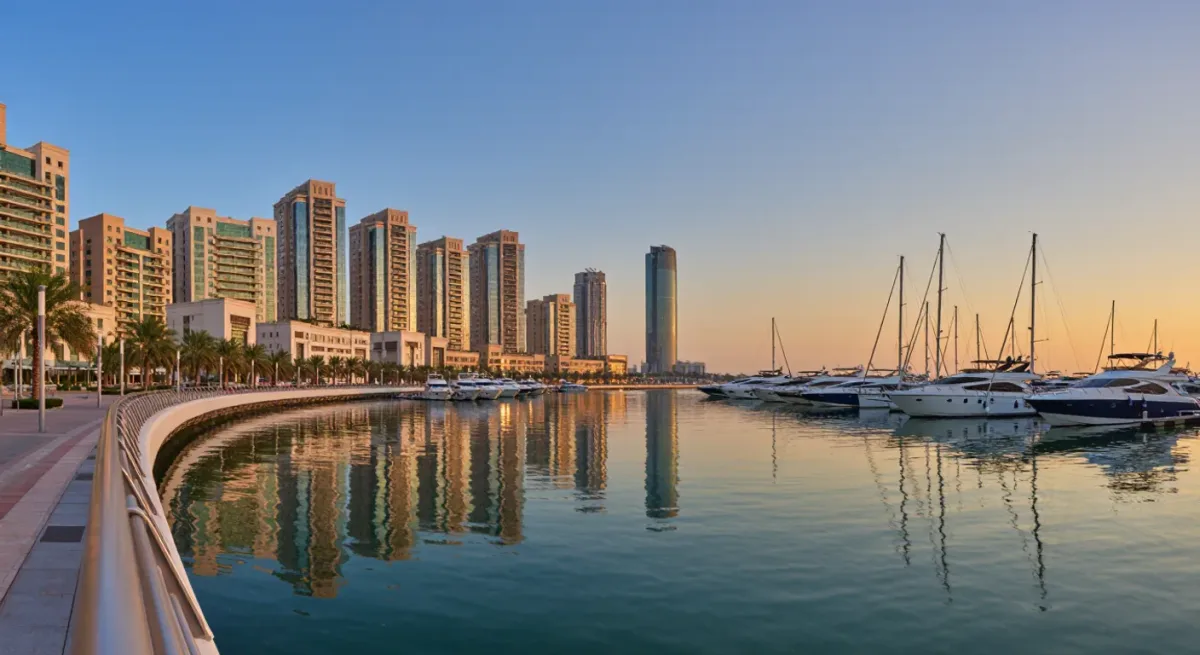
Foreigners have been able to buy freehold property in Abu Dhabi's designated investment zones since a 2019 resolution opened them to all nationalities, removing the earlier GCC-only restriction. The main zones include Yas Island, Saadiyat Island, Al Reem Island, Al Maryah Island and progressively expanded mainland districts, and transactions are registered with the emirate's Department of Municipalities and Transport through its DARI portal.
The fee structure is lighter than Dubai's: Abu Dhabi charges a 2 percent transfer fee on property sales, against the 4 percent applied in the wider UAE property market's busiest emirate. That difference shows up directly in deal maths on comparable units.
What the zones actually are
Investment zones are not a tax construct; they are planning and ownership designations. Within them, non-GCC buyers take full freehold title, can resell without restriction, and can pass title to heirs. Outside the zones, foreign ownership remains limited to leasehold or usufruct arrangements of defined length.
- Yas Island: master-planned by Aldar around the theme park and marina cluster; apartments and villas aimed at both end-users and investors.
- Saadiyat Island: the cultural district, anchored by Louvre Abu Dhabi, which opened in 2017, with the Natural History Museum under construction nearby.
- Al Reem and Al Maryah: high-density residential and business towers, the closest Abu Dhabi comes to Dubai-style vertical living.
How buying works
The sequence is conventional. A buyer reserves a unit, signs a sale agreement through a registered broker or directly with a developer, obtains a no-objection certificate where a mortgage or existing title encumbrance exists, and transfers title at the registration trustee, paying the 2 percent fee plus fixed administrative charges. Mortgage finance from UAE banks is available to residents and non-residents, with down payments for non-residents typically higher than for resident buyers.
Off-plan purchases run through developer registration similar in logic to Dubai's system, with project accounts supervised to protect buyer instalments against construction progress.
Why the 2019 change mattered
Before 2019, foreign buyers in Abu Dhabi were largely confined to designated areas under allocation rules, and secondary market depth suffered. Opening all investment zones to any nationality unified demand, and volumes responded: developers led by Aldar, the emirate's dominant listed developer, reported sustained sales growth in the years that followed, including strong off-plan absorption on Yas and Saadiyat.
The 10-year visa framework amplified the effect. Golden visa eligibility tied to AED 2 million of property gave Abu Dhabi inventory a residency narrative it previously lacked, and capital that might otherwise have defaulted to Dubai began pricing the capital's zones on yield comparisons.
Yields, service charges and the fine print
Gross advertised yields on Abu Dhabi apartments have generally run a touch higher than comparable Dubai stock, with portal and broker surveys quoting gross figures broadly in the 6 to 8 percent range depending on district and building age. Two deductions matter more than headline yield: service charges per square foot, which vary sharply between towers, and cooling arrangements, which in district-cooled buildings are a recurring line item tenants dispute.
Financing and fees intersect too: the 2 percent transfer fee plus mortgage registration improve round-trip economics, but thinner secondary liquidity than Dubai means exit timelines can be longer for non-prime units.
Service charges, cooling and the ownership arithmetic
Abu Dhabi's headline yields need the deduction stack applied before comparison. Service charges, quoted per square foot and recorded against each title, vary sharply between buildings, and towers with hotel-grade amenities on Yas and Saadiyat carry some of the emirate's heaviest schedules. District cooling, supplied through metered networks across the newer districts, adds a recurring charge that tenants and owners dispute in roughly equal measure, and buyers should ask for the trailing twelve months of cooling bills for the specific unit, not a building average, before committing.
The resale arithmetic works differently from Dubai's. On a AED 2 million purchase, Abu Dhabi's 2 percent transfer fee saves AED 40,000 against Dubai's 4 percent at entry, and the saving repeats on exit for the buyer you eventually find. Against that, broker commissions and mortgage registration fees are broadly similar across the two emirates, and Abu Dhabi's longer average marketing periods mean carrying costs, service charges accruing on an empty unit, often consume part of the fee advantage. The honest framing: Abu Dhabi is cheaper to transact and slower to exit, and investors pricing the two markets should model a full cycle, entry, holding and exit, rather than the entry fee alone.
The school and community map
Family demand, the backbone of prime resale values, follows the schools. Saadiyat's cultural district and its school cluster support the emirate's most resilient premium segment; Yas combines attractions and residential density into a self-contained market; Al Reem and Al Maryah serve professionals working on-island who want a short commute. Rental demand tracks the same geography, and landlords near the established schools experience shorter voids and steadier renewal conversations than identical units in districts still building their community infrastructure. Buyers choosing between zones should weight school catchments and commute anchors ahead of headline price per square foot, because the market does.
How it compares across the Gulf
Abu Dhabi's model sits between Dubai's fully open freehold market and Riyadh's still-forming foreign ownership framework. For renters weighing a move to the Qatari capital instead, our Doha rental market guide brackets what leasing costs there. Each market's openness to foreign title is now a first-order question for regional capital allocation, and Abu Dhabi's 2019 resolution is the reference point for how quickly policy can reprice a whole emirate.