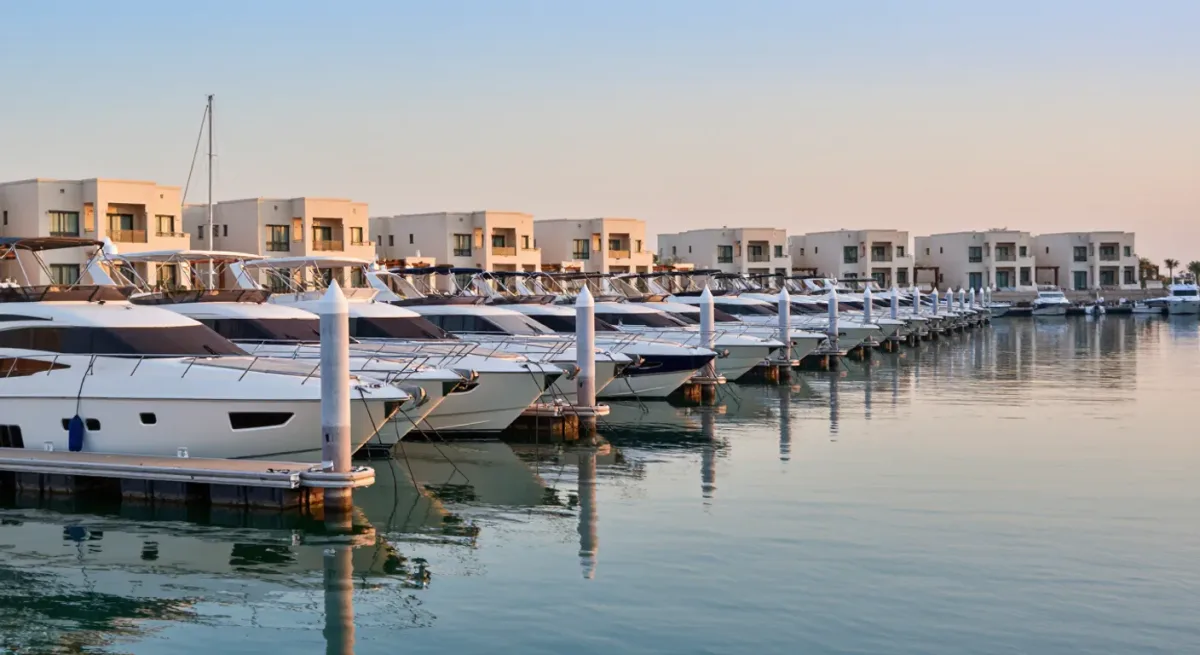
Foreigners can buy freehold property in Oman inside designated Integrated Tourism Complexes (ITCs), master-planned communities such as Al Mouj Muscat, Jebel Sifah and Muscat Hills, and ownership in an ITC comes with a residency permit for the owner and immediate family. Outside those zones, the long-standing route for non-Omanis is musataha, a registered long-term use right running up to 50 years and renewable.
It is a two-tier system, and the tiers price differently. ITC units trade on international buyer demand and resort performance; musataha valuations track local commercial rents. Together they frame Oman's property market for foreign capital, which the government has been trying to widen for a decade.
How ITC ownership works
ITCs were created to pull resort-grade development and foreign capital into one container. Within a registered complex, non-GCC nationals may purchase apartments and villas on a freehold or long-lease basis, register title with the Ministry of Housing and Urban Planning, and resell to any eligible buyer. The residency attachment is administered through the Royal Oman Police, and it is the feature that converted ITC units from holiday stock into a relocation product.
- Al Mouj Muscat: the flagship, a joint venture community with a marina, golf frontage and hotel operator presence, delivering phases since the 2010s.
- Jebel Sifah and Muscat Hills: established resort and golf-residential communities with international buyer bases.
- Newer designations: additional complexes have been added along the coast, extending the freehold map beyond Muscat.
Musataha, the other half of the market
Musataha is a civil-law right to use and develop land for a registered term, granted for periods up to 50 years, extendable. Banks accept musataha as security, which makes it the workhorse structure for commercial sites, industrial plots and agricultural projects where foreign freehold is unavailable. A buyer holding musataha can build, lease and mortgage within the term, and the right itself is transferable.
The distinction matters at exit: freehold ITC title is simple to explain to a next buyer anywhere; a residual-term musataha is priced by remaining years and contract conditions, so the discount over time is mechanical.
Costs, process and checks
Transfer fees on ITC purchases have generally run at about 3 percent of the price, with notarisation and registration charges on top, though rates and exemptions have shifted with policy updates, so confirming the current schedule with the Ministry of Housing and Urban Planning before budgeting is essential. The process: reserve the unit, sign through the developer or reseller, obtain a no-objection where mortgages exist, and register the transfer to perfect title or the musataha entry in the registry.
| Structure | Who can hold it | Term | Residency attached |
|---|---|---|---|
| ITC freehold | Any nationality | Perpetual | Yes, owner and family |
| Musataha | Foreign persons and companies | Up to 50 years, renewable | No |
| Usufruct | Foreign persons and companies | Defined term | No |
Why Oman prices as it does
Omani residential and resort pricing sits visibly below UAE comparables, and the gap is policy-driven: residency rights are narrower, the buyer pool is smaller, and liquidity in resort communities is thinner. The upside argument is the same triangle: coastline quality, entry pricing and a state explicitly courting foreign investment under its Vision 2040 diversification push, which has extended the ITC list and streamlined registration over time.
Buyers comparing the region's open-title markets should also read our guide to the UAE golden visa property threshold, since Oman's ITC residency and the UAE's AED 2 million visa route compete for the same relocation budgets.
Financing, fees and the rental comparison
Omani banks lend against ITC property to resident buyers, and non-resident purchasers find a narrower but real financing market, with down payments typically higher than resident loans and terms set case by case. Transfer costs centre on the registration fee, commonly around 3 percent of the price plus fixed administrative charges, though schedules have shifted with policy updates and the Ministry of Housing and Urban Planning's current table governs. Community fees apply within ITCs, Al Mouj's marina and golf community among the most established, and they fund exactly the amenities, security, landscaping, marina operations, that the residency-linked lifestyle depends on; buyers should read the trailing fee history rather than the quoted annual figure alone.
Rental comparison frames the investment case. ITC rentals track Muscat's professional expatriate market, with achievable gross yields for well-run units commonly quoted in the mid-single digits, portal and broker surveys place Omani gross yields broadly at or slightly above UAE comparables on much lower entry prices. The offset is illiquidity and a smaller tenant pool: a Marina district tower in Dubai re-lets in weeks, an Omani villa community re-lets in months, and pricing a fair exit matters more than pricing the entry.
Residency, renewed and repeated
The ITC residency permit attaches to ownership and renews with it, covering the owner and immediate family, and its practical value scales with the owner's travel pattern: Gulf residence simplifies regional movement, banking and longer stays that visa runs previously complicated. Holders should diarise renewals, keep the no-objection trail clean where mortgages exist, and note that the permit lapses with a sale, so exit planning and residency planning are the same conversation. Oman's quiet pitch, coastline, cost and a residency door the UAE's thresholds have priced beyond many budgets, keeps the ITC market's steady international traffic, and the buyers who do best in it are the ones who arrive knowing the liquidity trade they are making.
The base case
For a lifestyle buyer or a small investor, the honest framing is this: Oman offers coastline and price, ITC ownership is legally clean and residency-attached, and the trade is liquidity. Size positions accordingly, verify the current fee schedule and the complex's registration status at signing, and treat musataha as a commercial instrument with a clock, not a proxy for freehold.