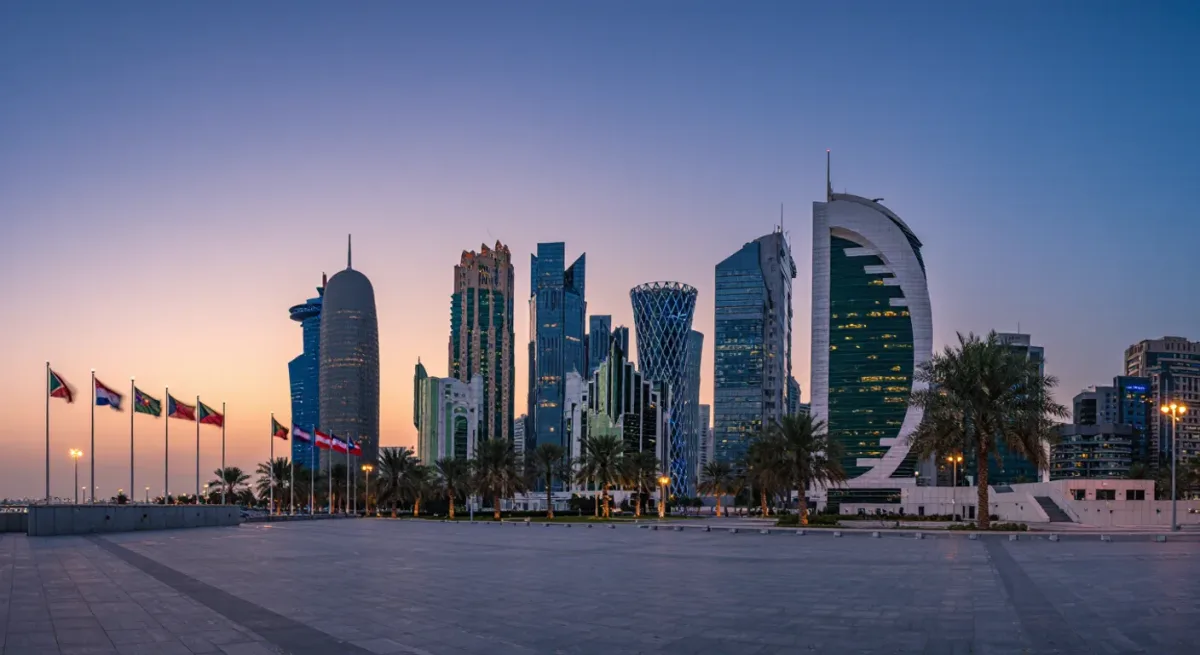
Qatar announced four days of national mourning beginning Sunday, July 12, 2026, for Sheikh Hamad bin Khalifa Al Thani, the Father Amir, who died at the age of 74, The Peninsula reported. Work was suspended in the country's ministries and government bodies, flags flew at half-mast, and world leaders from Europe and Asia travelled to Doha to pay respects.
The UAE declared its own four-day mourning period with flags lowered, India proclaimed a one-day state mourning on July 13, and Bangladesh announced a half-day of mourning, a measure of the standing the former emir retained across the region. For the Gulf's diplomatic map, the death of the ruler who set Qatar's independent course marks the closing of an era that shaped the modern energy and media landscape of the Middle East.
The reign that built modern Qatar
Sheikh Hamad took power in 1995 and abdicated in favour of his son, the current Emir Sheikh Tamim bin Hamad Al Thani, in 2013. His eighteen years in power transformed the country: the liquefied natural gas industry he championed turned a small pearling economy into one of the world's largest exporters of gas, the wealth that followed funded the Qatar Foundation's education city, Al Jazeera's 1996 launch redrew regional media, and the Aspire sports academy began the investments that carried the country to the 2022 FIFA World Cup.
| Year | Milestone under his reign |
|---|---|
| 1995 | Takes power in a peaceful transfer within the ruling family |
| 1996 | Al Jazeera launches |
| 1997-2000s | LNG expansion makes Qatar a top global exporter |
| 2013 | Abdicates in favour of Sheikh Tamim |
| 2026 | Dies at 74; four days of national mourning |
Market and institutional implications
None are immediate, and that itself is the point. Sheikh Hamad had been out of day-to-day rule for thirteen years, the succession was settled in 2013, and the state's institutions, QatarEnergy, the Qatar Investment Authority, the ministries, operate under the current emir without transition risk. Observers noted continuity as the defining feature of the succession scenario: the Father Amir's passing changes the family's advisory geometry, not the state's direction.
The diplomatic weight of the mourners told its own story: leaders from France, Germany and Britain among others travelled to Doha during the mourning period, reflecting the mediation relationships Qatar built on the foundation of Sheikh Hamad's foreign policy, relationships tested heavily by the region's 2026 conflicts and still central to ceasefire diplomacy, as covered in our reporting on the Gaza disarmament agreement in which Qatar mediated.
What happens ceremonially and practically
- Mourning periods in Qatar, the UAE and partner states concluded without disruption to business operations beyond government office closures on the first days.
- Condolence ceremonies brought delegations whose composition is read in Gulf capitals as a diplomatic census.
- No changes to economic policy, energy contracts or investment mandates were announced in connection with the mourning.
The foreign policy he founded, and its inheritance
Sheikh Hamad's diplomacy set the template his successors still run. The founding move was independence, a small state refusing satellite status to any neighbour and building the tools of autonomy, the media platform, the mediation channel, the gas leverage, that let Qatar talk to everyone. The second was brokerage, Doha's habit of hosting every party to every conflict, from Sudan to Afghanistan to Gaza, which made a country of two million people diplomatically indispensable. The third was the wealth that funded both, the LNG contracts that turned diplomatic ambition into an endowment. The 2017-21 blockade by four Arab states was the strategy's sternest test, and Qatar's endurance through it, supplied by Turkey and Iran, its ports rerouted, its gas contracts honoured, was the Father Amir's design working exactly as drawn, whatever its costs.
His death therefore marks a line under the founding generation of modern Gulf statecraft, the rulers who took power in the 1990s and 2000s and converted hydrocarbon concessions into sovereign strategies. What remains is the machine itself, and 2026 tested it harder than any year since the blockade: airspace closures, regional war at close range and an LNG infrastructure attack on the industrial city he built. The state emerged intact, its mediation still in demand, its chequebook still credible, and the passing of its architect was mourned in the capitals he trained his whole reign to be able to defy.
What changes, and what does not
The mourning calendar itself closes the story: four days of flags at half-mast, the condolences received, and then, as designed, the ministries reopened and the gas flowed on schedule.
The practical succession arithmetic is unchanged: Sheikh Tamim has ruled since 2013, the crown prince's position is settled, and the Qatari system's characteristics, consensus within the ruling family, continuity of grand strategy, and the gas-funded insulation of both, are institutional rather than personal. Analysts noted nothing in the transition that alters the state's investment posture, its mediation roles or its alliance geometry. The era that closed with the Father Amir's death was a founding era; the machinery it built carries on without missing a week's business, which in dynastic politics is the definition of success.
The assessment
Sheikh Hamad bin Khalifa's legacy is the state itself: a small peninsula converted into a global gas supplier, an influential media actor and a mediator that every major power now calls. The mourning period, at home and mirrored abroad, measured that legacy in flags and flights. The state he built carried on through the week, which is precisely what he designed it to do.