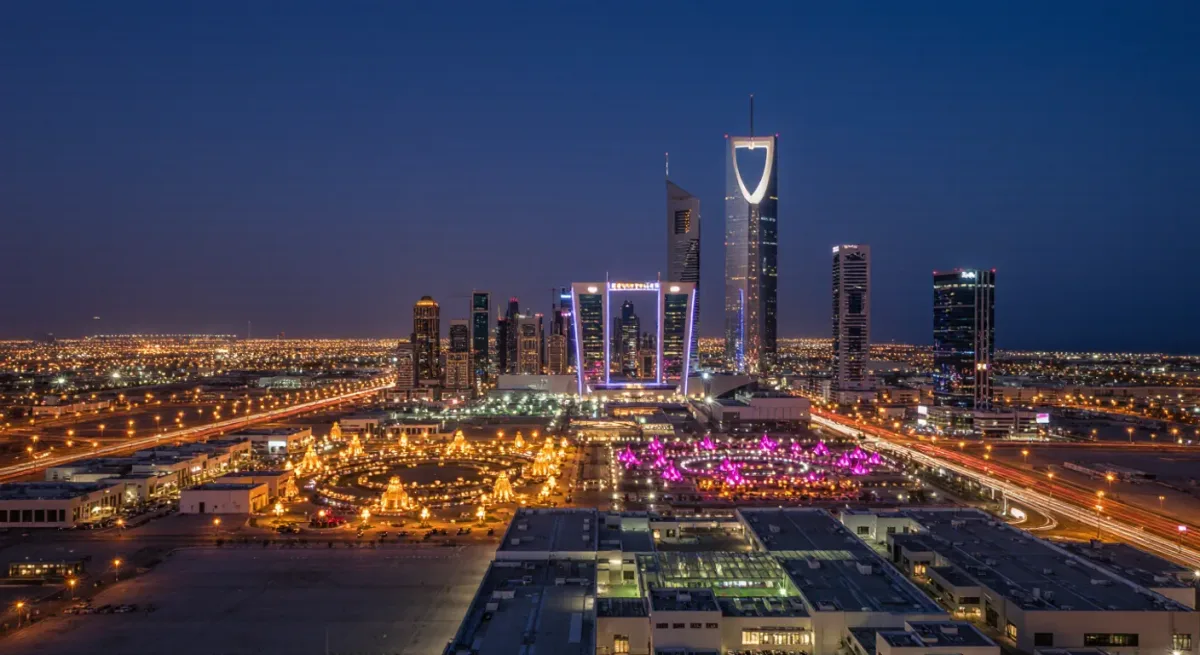
Riyadh Season is Saudi Arabia's flagship entertainment festival: a months-long programme of zones, concerts, sports and dining that runs through Riyadh's winter, launched in 2019 and now in its sixth edition. The General Entertainment Authority's chairman, Turki Alalshikh, said the latest season drew 17 million visitors, after the previous edition reported 19 million, numbers that make a single festival comparable in attendance to world expos.
The event is the visible half of a deliberate policy. Under Vision 2030, the kingdom set out to build a domestic leisure economy, capturing spending that previously flowed to Dubai, Bahrain and further afield, and to employ the large youth cohort that entertainment industries hire. Riyadh Season is the delivery vehicle Saudi cultural life built for that purpose.
What is actually in it
The format is zones. The Boulevard, the flagship district, packs theatres, restaurants, arcades and pop-up brands into a walkable entertainment city. Beyond it, themed zones rotate each year: winter wonderlands, e-sports arenas, anime and comic conventions, and a growing sports calendar that has hosted boxing title fights, Formula E and football events. Each zone sells tickets separately, with free access periods and headline concerts priced at international levels.
| Edition | Reported attendance |
|---|---|
| Season since October 2024 | 19 million visitors |
| Sixth edition (2025-26) | 17 million visitors |
| All Saudi seasons combined | More than 320 million visits across 60 seasons |
Figures are from the General Entertainment Authority and the Saudi Press Agency.
The money and the jobs
The authority reported that Saudi Arabia's entertainment sector hosted more than 89 million visitors across 1,690 events in 2025, with 6,778 companies participating. Each season hires tens of thousands of seasonal staff, and the surrounding economy, hospitality, transport, food service, stretches visibly during the October-to-spring window. The strategy's employment logic is straightforward: events are labour-intensive and quick to stand up.
Commercially, Riyadh Season also functions as a shop window for the kingdom's wider openings: cinema operators, international restaurant groups and sports promoters all treat a successful season appearance as the entry ticket to the Saudi market.
How it changed Riyadh
The city's weekend rhythm has visibly reorganised around the season. Outdoor life, once minimal, now runs late into winter nights; women-only and family zones, international acts and mixed audiences are standard; and the event calendar now anchors hotel occupancy and flight schedules. Real-estate agents price proximity to Boulevard-adjacent districts accordingly.
Sceptics note honestly that attendance figures are unaudited and that the season's economics, ticket revenue versus state subsidy, are not published. The counterpoint is equally factual: the queues, the hotel rates and the sponsorship market are observable, and the private investment following the calendar is real.
How Riyadh Season is financed and governed
Each edition also functions as a small-business engine, and the 6,778 companies counted across the 2025 entertainment year include thousands of food, retail and production SMEs whose annual economics now turn on the calendar's rhythm.
The event is produced by the General Entertainment Authority, the state body created in 2016 as part of the Vision 2030 opening, and its economics blend ticket revenue, sponsorship and state support, proportions unpublished. What is observable: the sponsorship market around the season has professionalised, with telecoms, banks and beverage brands buying zone naming rights each edition, and international promoters now route boxing and music events through Riyadh on multi-year frameworks rather than one-offs. Each season also functions as a small-business engine, the 6,778 companies counted across the 2025 entertainment year include thousands of food, retail and production SMEs that exist on the events calendar's rhythm.
Governance criticism follows a consistent line: attendance figures are self-reported, the authority both promotes and regulates the sector it dominates, and the season's balance sheet is not audited publicly. The counter-observation is equally consistent, the private investment, hotel occupancy and sponsor renewals are market behaviours that cannot be decreed, and they have compounded through successive editions. For investors, the season's real disclosure is the calendar itself: what returns, what expands and what is quietly dropped tracks the sector's commercial learning better than any press release.
The season's regional imitators
For the Saudi household budget, the season has become a fixed line: families allocate for zone visits the way holiday budgets work elsewhere, and the pricing structure, free-entry zones alongside ticketed headline attractions, deliberately spans income levels, which is part of why the attendance figures reach the tens of millions.
Riyadh Season's success has produced a competitive response across the Gulf and wider region: Jeddah's event calendar extended its own seasons, Kuwait and Bahrain expanded winter programming, and Qatar's cultural calendar lengthened its season design. The competitive logic is the same one that drives the Gulf's aviation and finance rivalry: domestic leisure spending is finite, and every capital now competes to host it. For visitors, the practical result is a region-wide winter of overlapping festivals, and for the industry, a market that grows more professional each season because the benchmark sits in Riyadh.
Practical guidance for visitors
- Season runs roughly October to spring; zones peak in December-January when the weather is best.
- Buy zone tickets and concert seats online ahead; headline events sell out.
- Weekdays are markedly quieter than Thursday-Friday weekends.
- Compare with the broader calendar in our guide to the best time to visit the Gulf, which brackets the season inside the region's cool months.
The summary: Riyadh Season is a state-built, publicly reported festival that has turned the Saudi winter into an industry, and its visitor numbers, whatever their audit status, are now a recurring line in the kingdom's economic story.