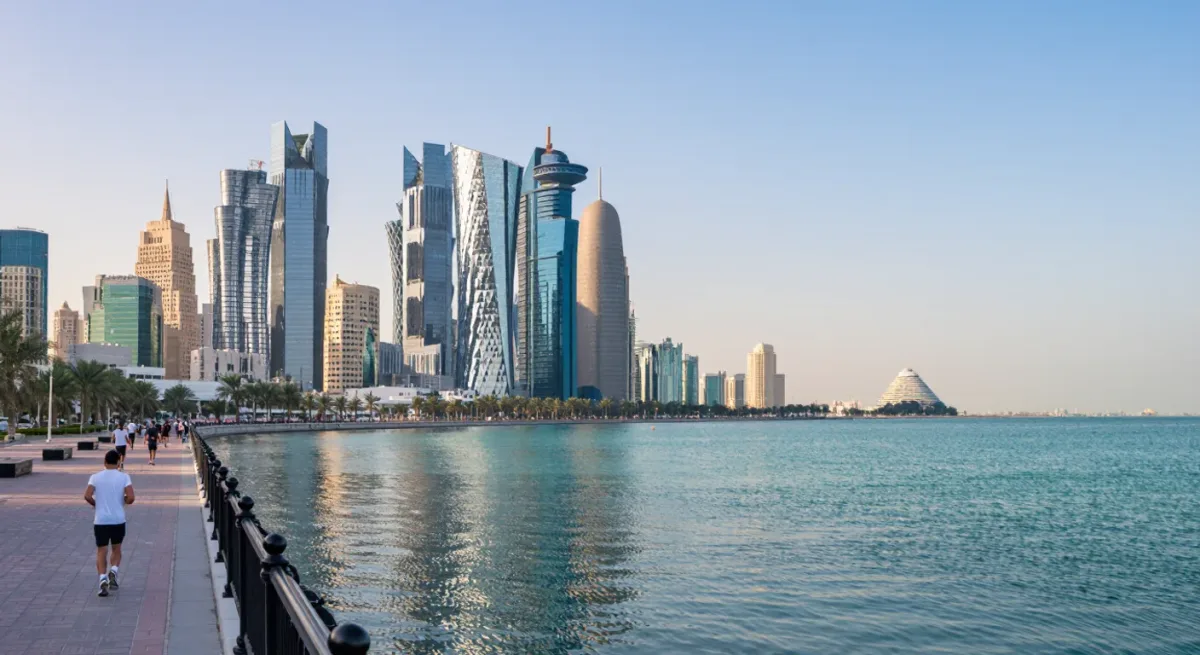
The best time to visit the Gulf is November to March, when daytime temperatures across Dubai, Riyadh, Doha and Muscat sit roughly between 24 and 32 degrees Celsius, the outdoor calendar opens fully, and every city's festival season runs at capacity. Summer, June through September, brings 45-degree-plus heat that pushes life indoors and hotel rates to their annual lows.
The region's tourism economics now follow that arc. Dubai's shopping festival has anchored the January-February window since 1996, Global Village runs October to April, and Riyadh Season fills the Saudi winter with 17 million visits in its latest edition. For anyone planning a Gulf trip, the cool months deliver the region at full volume, and the hot months deliver it at half price.
Month by month
| Window | Conditions | Verdict |
|---|---|---|
| November-December | Warm days, cool evenings | Prime; events open, moderate rates |
| January-February | Coolest month, occasional rain | Peak season; shopping festivals |
| March-April | Warming, hazy toward April | Good shoulder; Ramadan dates can shift hours |
| May-September | 40-46C, humid on the coast | Cheapest rates; indoor itinerary required |
| October | Heat breaking | Shoulder value; calendar reopening |
What the cool season buys you
Outdoor life returns: beach days, desert camps, dhow dinners, walking districts from Alserkal to Diriyah's mud-brick quarters. The events stack up, Formula 1 in Abu Dhabi and Jeddah, Art Dubai, the Dakar Rally in Saudi Arabia, football and boxing cards, and the hotel pricing reflects it, winter rates in Dubai and Riyadh commonly run multiples of summer levels. Book early for December and January, the single busiest weeks of the regional year.
What summer actually feels like
Honest description: from June, stepping outside at midday is a physical event. Coastal humidity pushes the felt temperature past the dry-bulb reading, and outdoor activity migrates to dawn or disappears. But the indoor Gulf is formidable: malls, museums, indoor ski slopes, waterparks and, increasingly, summer-specific programming such as Dubai's indoor festival calendar. Families on school holidays and budget travellers fill the hotels at steep discounts, and attractions are genuinely uncrowded until mid-morning.
Summer also carries a cultural footnote worth checking: Ramadan's dates move about eleven days earlier each year, and the 2027 fast begins in early February, shifting working hours and evening rhythms for that trip's planning, as our explainer on Ramadan working hours sets out.
Country notes
- UAE: the fullest cool-season calendar in the region; summer indoor offer is the region's best developed.
- Saudi Arabia: winter is the season, AlUla's festival window runs through it, and Riyadh Season peaks December-January.
- Qatar: compact and museum-rich; November-March makes the walking itinerary comfortable.
- Oman: Muscat follows the same arc, while Salalah's khareef monsoon makes June-September its own green high season, the region's one true summer destination.
The shoulder months, ranked
Two windows deserve their own ranking inside the broad season. Late October to mid-November is the connoisseur's choice: the heat has broken, the event calendar is opening, and December's peak pricing has not arrived, so hotel rates sit materially below the festive weeks while weather is already comfortable across all six states. March is the second: warm without peak heat, festival seasons still running, and the pre-Easter lull that softens flight prices from Europe. April is the gamble, cooling comfort against the first hazy, humid weeks in the coastal cities, and it suits interior destinations, Riyadh, AlUla and the Saudi north, better than the coast. The ranking inverts for Gulf residents themselves, whose school-holiday calendar makes December and the spring break the domestic travel peaks.
What the winter window is actually like
Event-driven travellers should note the anchors in the window: Formula 1 closes the Abu Dhabi season in December and Jeddah's race follows in the spring, Art Dubai and the Gulf's fairs cluster in the new year, and Saudi Arabia's AlUla winter festival runs through the coolest months in a landscape best seen outside summer heat. Any of these can lift hotel rates in its host city for a week, so check the events calendar against your dates in both directions, to catch the spectacle or to dodge the crowd.
First-time visitors often misjudge the cool season as uniformly mild, and it is worth being precise. Days run 24 to 32 degrees across November-March in the coastal cities; evenings genuinely cool, occasionally jacket weather in the Gulf's colder snaps, and interior Saudi Arabia can touch single digits on winter nights, which surprises visitors packing only for heat. Rain is occasional and intense rather than frequent, and when it falls, the region's drainage infrastructure makes itself known. The sea is swimmable year-round on the Gulf coast, and the winter months are the region's outdoor season in full: desert camps, rooftop dining, outdoor sports, the entire life that summer moves indoors returns, which is the true reason November-March is the answer to the question.
Practical booking notes
One regional exception deserves its own line: Oman's Salalah, on the southern coast, runs the khareef monsoon from June to September, when its hills green over and temperatures fall, making it the Gulf's only true summer destination and the correct answer for travellers locked to school-holiday dates.
Target late November or March for the best weather-to-price ratio. For December-January travel, book flights and rooms months ahead, especially around New Year in Dubai. In summer, treat the hotel savings as real but check whether beach and pool facilities are usable in the afternoon heat, and confirm museum and mall hours, which extend late.
The one-line answer stands: come between November and March for the region at its best, or come in summer for the region at its cheapest, with a strictly indoor plan.