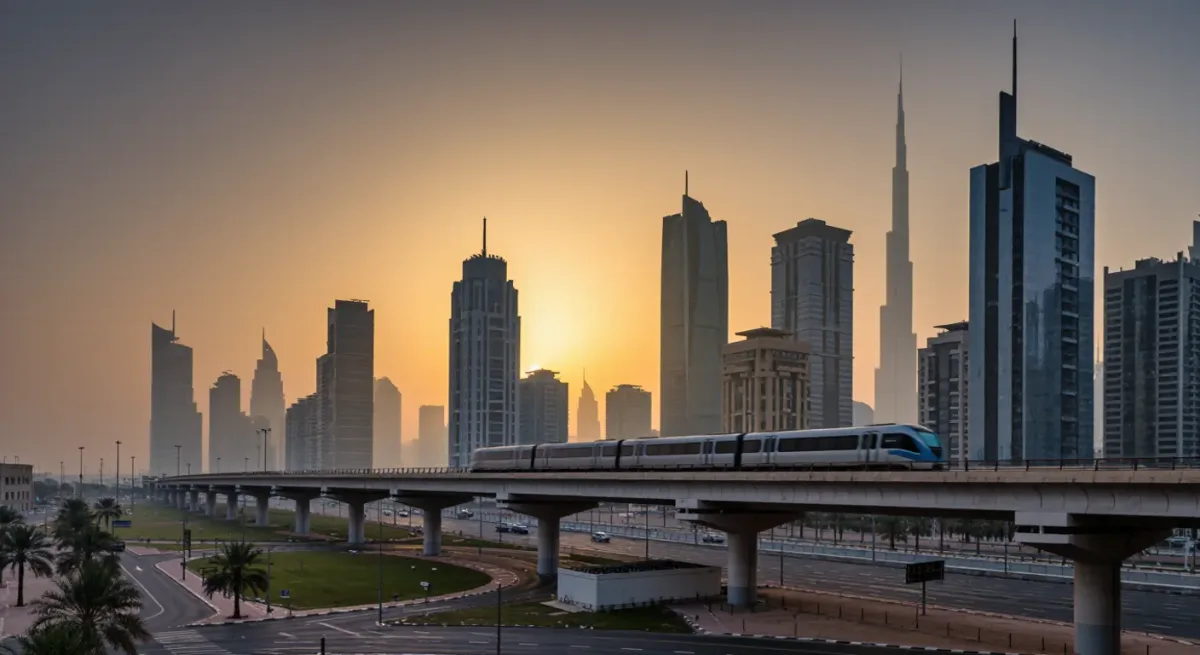
Yes, living in Dubai without a car is practical along the metro corridors: the Dubai Metro carried 275.4 million riders in 2024 and 294.7 million in 2025, both records, according to the Roads and Transport Authority, and total public transport and shared mobility ridership passed 800 million in 2025. The car-free life works best in a defined band of districts along the Red and Green Lines and breaks down in villa communities and newer outer developments.
Dubai was built around the car, and the metro, opened on 9 September 2009, arrived two decades after the sprawl. What changed the equation since is density: the city has piled jobs, towers and rental supply along the two metro lines deliberately, transit-oriented development is explicit policy, and daily life in Dubai now includes genuine walkable districts.
Where it works
| District | Line access | Car-free verdict |
|---|---|---|
| Downtown, Business Bay | Red Line | Excellent; everything within metro and walk radius |
| Dubai Marina, JLT, JBR | Red Line | Excellent; tram link extends the reach |
| Deira, Bur Dubai, Al Qusais | Green Line | Very good; older, dense, walkable grids |
| Dubai Silicon Oasis, Dubailand | Bus or drive | Hard without a car |
| Arabian Ranches, Springs | None | Not realistic |
What the network covers
The Red Line runs from Centrepoint through Downtown and the Marina to Expo City, the extension built for the 2020 Expo and retained as a commuter artery. The Green Line links the historic districts with the airport. The Dubai Tram serves the Marina strip, buses feed the stations, and ride-hailing, Careem and Uber, plus abundant taxis, fill gaps. Payment is contactless through Nol cards or device wallets, with monthly capping that makes a commuting habit affordable at a few hundred dirhams a month.
Summer is the design constraint: from June to September, walking distances beyond a few hundred metres become endurance events, so the car-free resident learns the shaded routes, the air-conditioned metro walkways and which stations connect directly into malls and towers.
What it costs versus owning
- Metro commuting with occasional taxis: roughly AED 400-700 a month.
- Owning a modest used car: financing or depreciation, insurance, fuel, Salik tolls and parking commonly total AED 1,500-2,500 a month before a parking space at home.
- The spread, a good AED 1,000-plus monthly, is one reason car-free households here save visibly, a pattern quantified in our guide to expatriate savings in the Gulf.
The honest limits
Three. Coverage outside the corridors is thin, and villa districts are functionally car-mandatory. Weekend destinations, deserts, beaches beyond the tram, mountains, need rented cars or tours, both easy to arrange. And carrying anything bulkier than groceries means a taxi, so families with children frequently keep one car regardless.
The city's own plans acknowledge the limits: metro expansion, the Blue Line approved to serve the inner-city crescent, and continued densification along stations are all in the RTA's published programmes, intended to widen the car-free map through the 2030s.
The Blue Line and what comes next
The car-free map is set to widen. The RTA's Blue Line, approved to serve the crescent between the Red and Green Lines through Mirdif and the inner-city districts, will add stations to neighbourhoods that are currently taxi-dependent, and the authority's published programme pairs it with continued densification around existing stations, apartments, offices and retail stacked on the metro's footprint. The design intent is explicit in Dubai's urban plans: transit-oriented development concentrates the city's growth where the rails already run, which over time converts the car-free question from a district-by-district exception into the default for new supply.
Interim improvements are running meanwhile. Bus network redesigns have fed more routes into metro stations, shared e-scooters cover first-and-last-mile gaps in the denser districts, and ride-hailing's integration with Nol-based fare products continues to widen. None of this changes the summer arithmetic or the villa-district reality, but each increment moves the boundary of where living without a car is comfortable, and the ridership records, rising every year since the pandemic, say residents are using the boundary as it moves.
The verdict
The districts that reward car-free living, specifically
Within the broad corridor map, a handful of addresses deliver the complete car-free package: a station within a short walk, groceries and clinics at street level, and schools or nurseries reachable without a highway crossing. Downtown and Business Bay pair Red Line stations with covered pedestrian routes into towers and malls; JLT surrounds two stations with a dense, self-contained neighbourhood grid; Dubai Marina and JBR add the tram and the beach walk; Deira's older blocks put Green Line stations, souks and hospitals in the same pedestrian frame. Al Qusais and the Greens offer quieter, cheaper versions of the same logic. The pattern across all of them is mixed-use density, which is precisely what the car-dependent villa districts lack, and why the same metro map contains both the region's best car-free addresses and its car-mandatory ones.
The cost and comfort math for a commuter
Run the monthly comparison for a Marina-to-Downtown commuter. A Nol monthly pass plus occasional taxis lands around AED 500-700 with zero parking anxiety; a financed used car adds insurance, fuel, Salik tolls, parking at home and at work for a total commonly between AED 1,500 and 2,500 before depreciation. The annual difference, AED 12,000-20,000, is a holiday or an investment contribution, and it compounds for households that drop from two cars to one. The comfort side of the ledger is seasonal: in the cool months the metro commute is pleasant, in July and August it is a series of short, air-conditioned sprints, and commuters learn the shaded routes and the buildings with connected access. The honest verdict on comfort is that the metro trades Dubai's driving freedom for reading time, and the residents who stay car-free are the ones who value the second more than the first.
A single professional or couple choosing a home within ten minutes' walk of a Red or Green Line station can live in Dubai fully car-free, comfortably and more cheaply, with the summer months the only real tax. Anyone anchored to villa districts or outer free zones will not. Choose the address first, and the transport question answers itself.