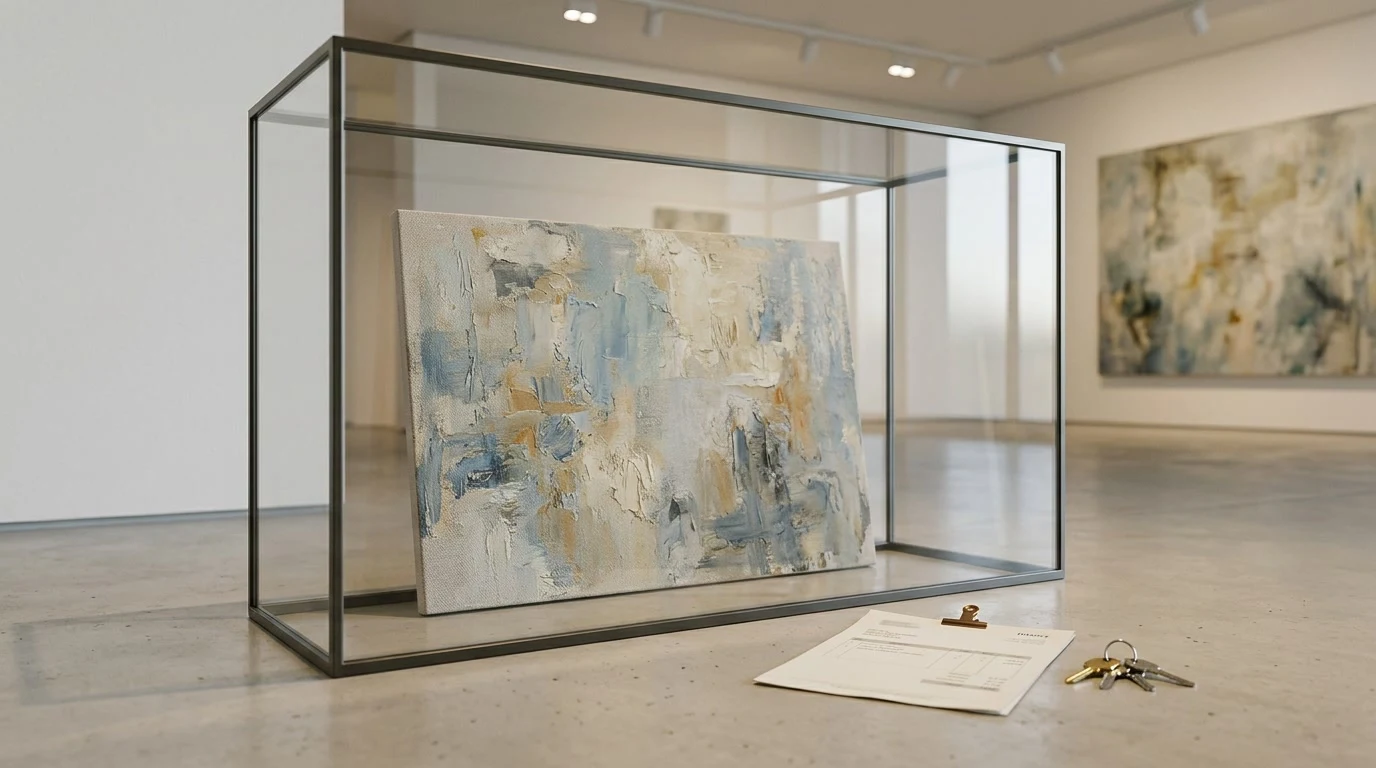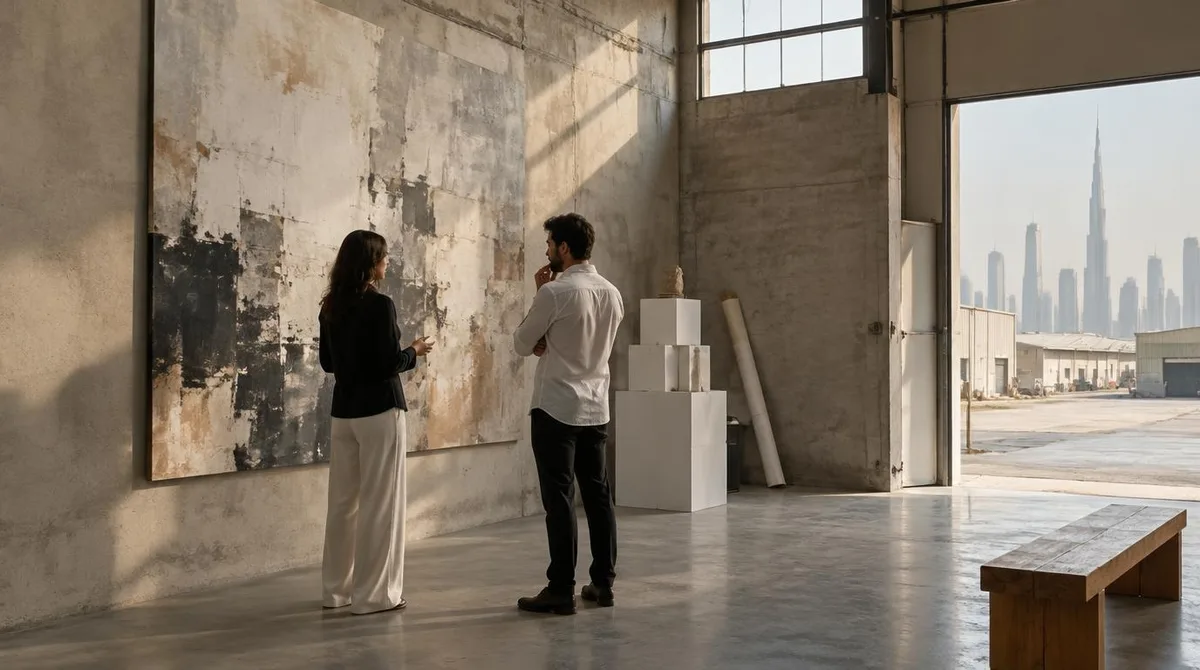
Alserkal Avenue in Al Quoz is the anchor point on Dubai’s gallery map. The converted warehouse compound holds 25 contemporary art galleries and arts spaces inside a one-block radius. That is the highest concentration of galleries in one place in the region. The site sits in the long rectangle of land between Al Khail and Sheikh Zayed roads.
Dubai art galleries Alserkal Avenue, Ayyam Gallery, and Carbon 12 set the pattern, taking warehouse units there in 2008 and 2009. What followed was a planned expansion, a run of gallery openings, and a district that now lists more than 60 creative venues. We covered a connected angle in Can you live in Dubai without a car.
How did warehouses become a gallery quarter?
The conversion of storage space did the early work. 39 industrial warehouses turned into a run of new uses: For related coverage, see Why the UAE moved to a four-and-a-half-day work week.
- art galleries
- design studios
- a private museum
- a performing arts space
Ayyam Gallery arrived first, in 2008. Carbon 12 followed in October 2009. It was then one of the region’s most active contemporary galleries. Other modern galleries moved in behind it, and the compound became a focal point of artistic activity.
Scale arrived next. In March 2012 the developer, Abdelmonem Bin Eisa Alserkal, announced 62 new units, an events centre, and added parking, per the avenue’s encyclopaedia record. By September 2012 the avenue held 20 art spaces, and the wider neighbourhood counted 33. The build-out finished in 2015. It doubled the site to about 500,000 square feet. A programming arm for artists from the Middle East, North Africa, and South Asia launched the same year.
What sits inside the compound today?
More than 60 art, design, and creative venues now operate across the compound, including 25 contemporary galleries, per the district’s own documented history. The list spans foundations, private collections, and community projects. Programmes cover exhibitions, talks, panel discussions, and young collectors’ auctions.
Two of the avenue’s galleries reached the Art Statements section of Art Basel. They were Gallery Isabelle van den Eynde and Green Art Gallery. The selection marked a first for the region. Concrete marks the built milestone. The exhibition space opened in March 2017. It was the first project completed in the United Arab Emirates by the Office for Metropolitan Architecture. The firm was founded by Pritzker Architecture Prize laureate Rem Koolhaas. The Alserkal Arts Foundation followed in March 2019. It took over a residency programme running since 2018, alongside public art commissions.
Where does the district sit in the city?
Al Quoz gives the avenue its setting. The area forms a long rectangle between Al Khail and Sheikh Zayed roads in western Dubai. Al Wasl, Business Bay, and MBR City sit on its northern edge. Al Barsha and Dubai Hills sit to the south, per the district’s encyclopaedia profile. It remains primarily an industrial area. Galleries, shops, theatres, and restaurants share the grid with warehouses and workshops.
What does the annual calendar add to the map?
The calendar widens the reach beyond one compound. Quoz Arts Fest, organised by Alserkal in 2022, welcomed 40,000 visitors across two days. It offered close to 200 activations. Art Dubai functions as the market’s annual meeting point. The international fair was founded in 2007 and runs every March, per the fair’s encyclopaedia profile. It runs under the patronage of Sheikh Mohammed bin Rashid Al Maktoum, Vice President and Prime Minister of the UAE and Ruler of Dubai.
The fair’s 2025 edition drew more than 30,000 visitors. The count included regional and international collectors and curators. Nearly 100 museums and institutions visited. The numbers hand the Al Quoz galleries a yearly global audience on top of their own programmes.
Conclusion: the gallery map still starts in Al Quoz
The geography holds. Alserkal Avenue turned industrial warehousing into a district of more than 60 venues. 25 galleries anchor it in a single block. Concrete added a purpose-built exhibition hall by OMA in 2017. The 2015 expansion set the current footprint of roughly 500,000 square feet. Art Dubai supplies the March meeting point, and Quoz Arts Fest supplies the neighbourhood festival. The next dates come from the calendar the district already runs: the fair’s return each March and the festival’s next edition.